WELCOME

Today, 1 in 3 women will experience birth trauma.

The effects include perinatal mood disorders, blaming yourself, and struggles with connecting to your baby and even your partner.

The biggest challenge is that there isn't a screening tool to assess for birth trauma, so how do you even know if this applies to you?

That's not something you figure out alone. It's something we figure out together. You bring what you know in your body. I bring what I know clinically.

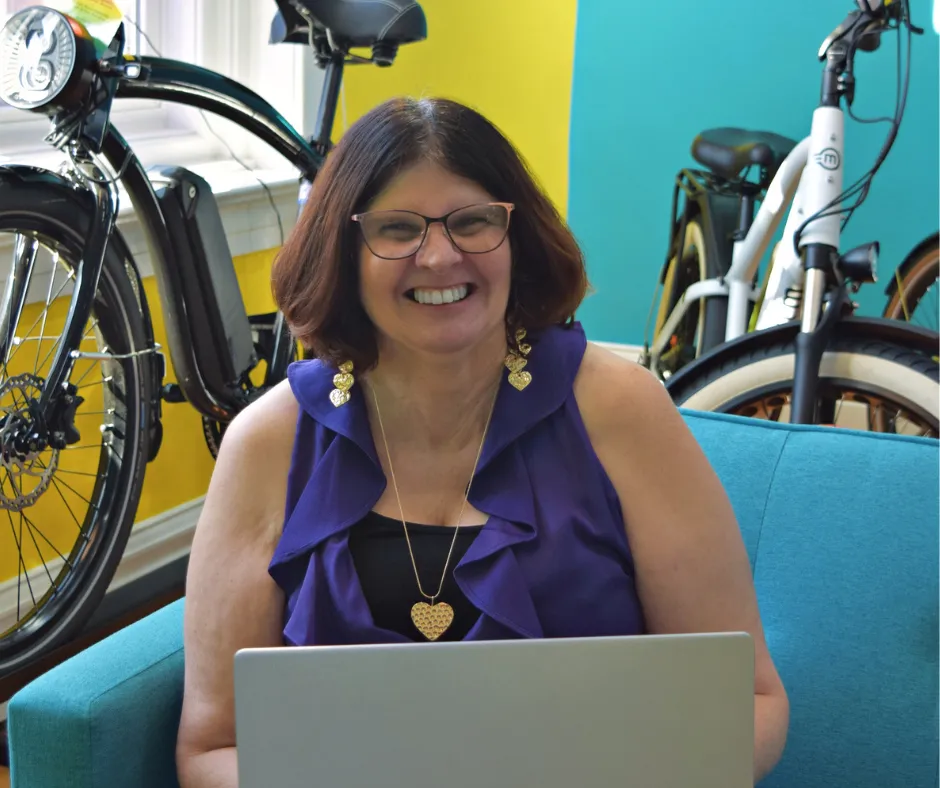
I'm Jamie. I started my career as a childcare provider, moved into birth work as a doula, and landed on therapy — specializing in perinatal mood disorders and birth trauma. I'm trained in EMDR and integrative approaches — nutrition, stress management, breathwork, and relational support — to help you let go of the trauma your body's still holding. The goal: helping you feel less on edge and more present with your baby and partner, more like yourself again.

Trauma Work is Evolving

Trauma work started with lots of talking, with the belief that sharing the emotions and the story would lead to healing. As time has progressed, we've learned that trauma is stored in the body as much as in the brain. Using techniques that release trauma from the body allows us to talk less and resolve more.


What Does a Session Look Like?

I believe that our bodies want to release the trauma. I have also seen in years of practice that distractions, relationships and other challenges can delay our progress as we try to move week by week.

I think there's a better way!

By committing to a plan to work on your birth trauma, we will have fewer distractions and you will experience more progress. I like to work in intensives which are longer, focused sessions that get you further than a standard 50-minute hour, week after week, ever could. Each session is unique as we learn what your body and brain responds to best. A session may include: Eye Movement & Desensitization (EMDR) therapy, Internal Family Systems (IFS), Somatic practices, and — most of all — I utilize connection and relationship to help move forward.

The End Goal is Helping You See Your Birth Story in a New Way

Inside our work, you'll learn:

Skills to stay grounded, even in intense moments

See your role as a parent as something you're growing into, not something you pass or fail

Make decisions for yourself and your child without second-guessing yourself

Trust your own read on your birth story more than anyone else's

What Makes This Different

We Teach You What to Do In the Moment


The goal of therapy isn't for you to bring your stressors each week & dump them out. The goal is to learn how to navigate negative emotions and thoughts successfully on your own.


Part of each session is dedicated to helping you learn the skills you need to feel confident, day to day.

Why Intensives Work

Your brain stays with it, instead of resetting each week. A standard 50-minute session means starting over with triggers every time. An intensive block lets your brain stay engaged with the work, instead of managing the gap between sessions.

Faster, measurable results. In one study of patients with severe PTSD, 82.9% showed a clinically meaningful response after intensive treatment — and 54.9% no longer met criteria for PTSD at all.¹

People actually finish. Dropout in the intensive study was just 2.3% — well below the 18% average dropout rate found across active PTSD treatments broadly.¹ ²

¹Van Woudenberg C, et al. Effectiveness of an intensive treatment programme combining prolonged exposure and EMDR for severe PTSD. Eur J Psychotraumatol. 2018;9(1):1487225.
²Imel ZE, Laska K, Jakupcak M, Simpson TL. Meta-analysis of dropout in treatments for posttraumatic stress disorder. J Consult Clin Psychol. 2013;81(3):394-404.


Support Between Sessions

In the middle of therapy, you are learning skills and tools. You are releasing trauma, old beliefs, and ushering in a new identity. That's a lot!

And life is still going on.

That's why I offer in-between session support to help you get the most out of your time in therapy.

To Learn More about how to work with me, schedule a 30 minute FREE consultation here: https://tidycal.com/doulajamiestx/30-minute-meeting

Who This Is For

You had a birth that didn't go the way you expected

You're still replaying moments from the delivery room

You experienced a loss

You are feeling rage you can't explain

You want to be happy about your baby, but you feel an unexpected heaviness

You feel disconnected from your baby, your partner, or yourself — and don't know why

What Changes

You stop feeling on edge and start feeling at ease as a parent

You can share your birth story from a place of strength, not weakness

You're sleeping and eating better

You trust that you can do this

Your relationship with your baby and partner is closer

An Evidence-Based Approach

Specialized intensives are backed by real evidence. In trials of intensive treatment for severe PTSD, this approach — concentrated, focused sessions instead of once-a-week hours — showed a clinically meaningful response in 82.9% of patients, with dropout as low as 2.3%, well below the 18% average across active PTSD treatments broadly.¹ ²

I draw on that same principle — intensive, focused work — in how I support birth trauma processing.

¹Van Woudenberg C, et al. Effectiveness of an intensive treatment programme combining prolonged exposure and EMDR for severe PTSD. Eur J Psychotraumatol. 2018;9(1):1487225.
²Imel ZE, Laska K, Jakupcak M, Simpson TL. Meta-analysis of dropout in treatments for posttraumatic stress disorder. J Consult Clin Psychol. 2013;81(3):394-404.

© 2026 rights reserved